
A Food Lover’s Weekend in Lyon: Markets, Bouchons, and the City’s Young Chefs
A hungry weekend in Lyon: markets at dawn, a bouchon at noon, and young chefs rewriting the city’s menus by night. Where to graze, sip, and savor—no spreadsheet needed.
Trip Length
weekend
Best Time
April–June and September–October; year-round for markets and bouchons
Mood
culinary
You arrive just as the metal shutters slide up at the covered market and the air turns savory-sweet—roasting poultry, neat rows of terrines, praline brioche the color of rose petals. Lyon wakes hungry. This is where a weekend can be measured by meals, and where a Lyon food guide should start at first light, when the city reveals its appetite and its generosity.
Lyon food guide: markets to morning bites
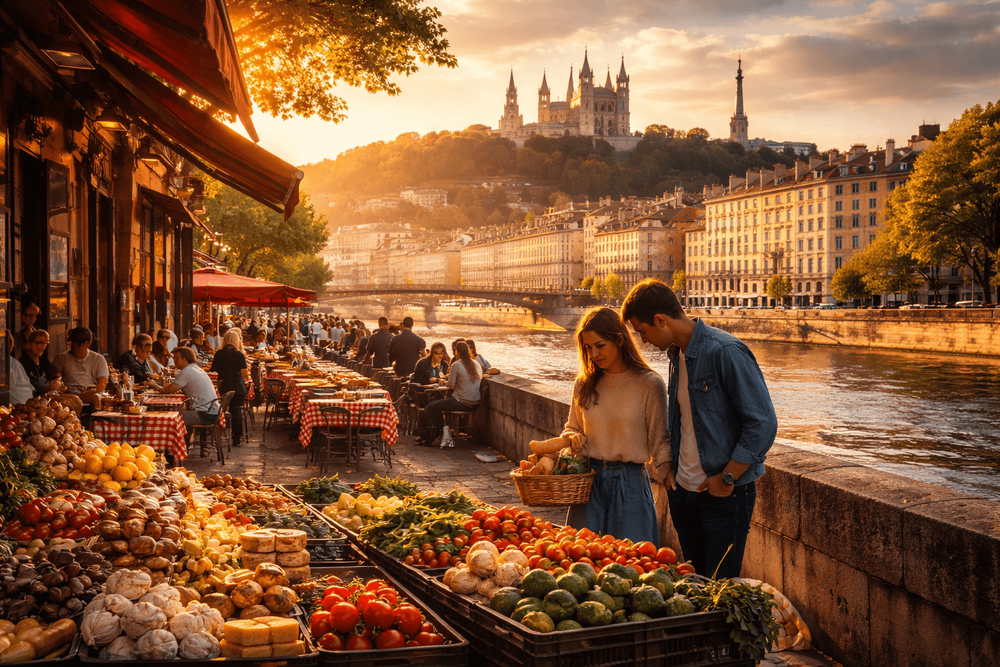
Start at the city’s famed covered market, Les Halles de Lyon – Paul Bocuse. Even if you’re only browsing, it’s a master class in regional pride: ribbons of saucisson studded with hazelnuts, wheels of Saint-Marcellin and Saint-Félicien as soft as a sigh, and counters devoted to quenelles waiting for Nantua sauce. Order a coffee and a warm pastry, then weave past fishmongers and fromagers taking the day’s first orders. From here, cross to the Saône to graze the open-air riverside market, where greengrocers stack tomatoes like museum pieces and farmers peddle herbs that smell like sunshine.
By late morning, let the city do what it does best—teach you the grammar of appetite. Look for praline-filled tarts in bakery windows and the peppery snap of rosette in charcuterie shops. Pick up a picnic’s worth of cheese, fruit, and a still-warm baguette, then drift to the quays for a late-morning pause. Even in a short weekend, Lyon’s markets set the cadence: small bites, vivid flavors, no rush.
Lunch in a bouchon, tradition with a wink
Midday belongs to the bouchon, those unfussy dining rooms that defined Lyonnaise cooking long before tasting menus. Expect wood tables, snug banquettes, and a menu that reads like a love letter to thrift and technique. Classics matter here: a proper salade lyonnaise with frisée, lardons, and a runny egg; quenelles as light as clouds; pike, veal, and offal treated with tenderness and verve. End with cervelle de canut—fresh herbed cheese—washed down with a short carafe of Beaujolais or a peppery Côte du Rhône.
What’s changed is the sensibility. A new generation has adopted the format and sharpened it. You’ll spot the difference in the sides—more bitter greens, bright pickles, a careful hand with acidity—and in the wines, where natural bottles mingle with heritage labels. It’s not a repudiation of Lyon’s heritage; it’s a gentle edit, a proof that a cuisine rooted in patience can still be agile.
Afternoon wander: from traboules to tea rooms
Walk it off through Vieux Lyon’s Renaissance alleys and the traboules—those secretive passageways that cut through courtyards—then ride the funicular up to Fourvière for a panorama that sets the city’s geography straight: Rhône and Saône cupping the Presqu’île like a stage set. On the return, drop into a patisserie for a slice of tarte aux pralines, its lacquered pink sheen defying restraint, or, in cooler months, for a paper bag of airy bugnes dusted with sugar.
If wine beckons, the city obliges. Cellars showcase Beaujolais’s granite charm and the north’s syrah—dark fruit, violets, pepper. Seek a standing bar where glasses change as quickly as the chalkboard. Conversations here often start with vineyards and end with lunch recommendations; Lyon rewards curiosity.
Saturday night belongs to the new chefs
The energy right now is in kitchens where counter seating brushes up against an open pass, playlists run modern, and menus pivot with the morning market. You’ll find them across the Presqu’île, climbing into Croix-Rousse, and spreading east toward Guillotière, where global flavors seep naturally into the pot. The motif is confident but light: one perfect fish with an herb-flecked broth; a plate of beets, black sesame, and aged cheese that wins the table; a riff on tripe or sweetbreads that’s so deft it turns skeptics.
There’s a throughline—seasonality without sermonizing, fermentation used for brightness more than bravado, and pastry that remembers you came to Lyon to be delighted, not punished. Desserts lean toward citrus curds, buckwheat caramels, and pastry cream that makes you consider moving here.
Bookings are wise, but keep room for surprise. Lyon is compact; a short walk can take you from a candlelit bouchon to a tiny counter turning out knife-edge plates, then to a wine bar pouring the kind of gamay that makes conversation effortless.
Sunday: riverside markets and silk-hill cafés
On Sunday, the riversides fill with stalls again—flowers, cheeses, baskets, mushrooms in season. Pick up a few things to carry home, then hike up into Croix-Rousse, the old silk workers’ slope, for cafés that lean into long brunches and tartines on excellent bread. This is where you see the handoff happen in real time: grandmothers discussing recipes, young cooks scrawling menus in pencil, everyone arguing amicably about the right vinegar for a salad.
If you need one more quintessential bite before the train, hunt down a warm slice of brioche studded with pink pralines or a slab of quince paste paired with aged Tome. Lyon is a city that urges a second lunch and forgives you for it.
What to order: a short, opinionated list
- Quenelle with Nantua sauce for the silken-meets-shellfish comfort you came for.
- Salade lyonnaise, perfectly bitter and rich, with croutons that crunch.
- Saucisson brioché, the city’s joyful nod to pastry plus pork.
- Cervelle de canut, herbed and garlicky, to spread on anything.
- Tarte aux pralines for dessert, ideally with coffee that tastes like chocolate.
Neighborhoods to taste
- Presqu’île: Classic addresses, convivial wine bars, and young tables tucked above the shopfronts.
- Vieux Lyon: Medieval lanes, traboules, and traditional bouchons that anchor the canon.
- Croix-Rousse: Hilly, creative, and increasingly chef-driven, with markets and cafés that spill into the streets.
- Guillotière: Lively, diverse, and delicious at every price point—great for global flavors.
- Confluence: Architectural bravado and light-filled dining rooms along the water.
Practicalities for a culinary weekend
- How to get there: Lyon–Saint Exupéry Airport (LYS) connects widely in Europe and via major hubs. A dedicated airport tram links LYS to the city. From Paris, high-speed trains run to Lyon Part-Dieu and Perrache, making a weekend dash entirely feasible.
- Getting around: The metro, trams, and buses are reliable and easy to navigate; funiculars connect the old town to the hills. Taxis and ride-hailing are available, but much of the dining core is walkable.
- Reservations: For popular dinner spots and traditional bouchons, book ahead. For markets and wine bars, spontaneity is part of the fun.
- Market etiquette: Bring a small tote and a few euros in coins for quick purchases; vendors will happily talk you through cheeses and charcuterie if you ask.
- When to go: Spring and fall feel tailor-made for eating and wandering—markets brim, terraces open, and the heat is kind. Winter has its own pleasures: richer menus, cozy dining rooms, and citrus-bright pastries. Summer is festive and late, with riverside evenings that slide into midnight.
Why this Lyon food guide is different
A useful Lyon food guide doesn’t overwhelm—it points you toward the city’s logic. Start in the markets, lunch where tradition holds, dine where young cooks listen closely to the seasons, and let wine bars stitch it all together. This is the template locals already live by, and it doesn’t require a spreadsheet—just curiosity and a decent appetite.
The last bite
Lyon rewards those who arrive hungry and leave a little wiser about flavor. Give it a weekend and it will hand you a way to eat: generous, precise, unpretentious. Keep room in your carry-on for a cheese or a ribbon of saucisson, and bookmark this Lyon food guide for your next train ride. The city’s tables are set; all that’s left is to choose where you’ll sit first.
Where to Stay

Pullman Lyon
Pullman Lyon is a 4-star hotel in Lyon with a 9.1 guest rating, offering modern stays in a central city location with easy access to transport, dining, and major sights.

Campanile PRIME - Lyon Centre Gare Part Dieu
Campanile PRIME - Lyon Centre Gare Part Dieu is a 3-star hotel in Lyon near Gare Part Dieu, offering convenient access to transport and the city center, with practical rooms and a strong 8.4/10 guest rating.

Radisson Blu Hotel, Lyon
Radisson Blu Hotel, Lyon is a 4-star hotel in the Part-Dieu district, close to Lyon Part-Dieu station and shopping. It offers modern rooms, city views, a restaurant, bar, fitness center, and meeting facilities.

Hotel Mercure Lyon Centre Gare Part Dieu
Hotel Mercure Lyon Centre Gare Part Dieu is a 4-star Lyon hotel near Part-Dieu station, offering easy access to the business district and city center, with modern rooms, a restaurant, bar, and meeting facilities.

Boscolo Lyon Hotel & Spa
Boscolo Lyon Hotel & Spa is a 5-star stay in central Lyon, offering stylish rooms, an indoor pool, spa facilities, a fitness center, and easy access to the city’s main sights and dining areas.