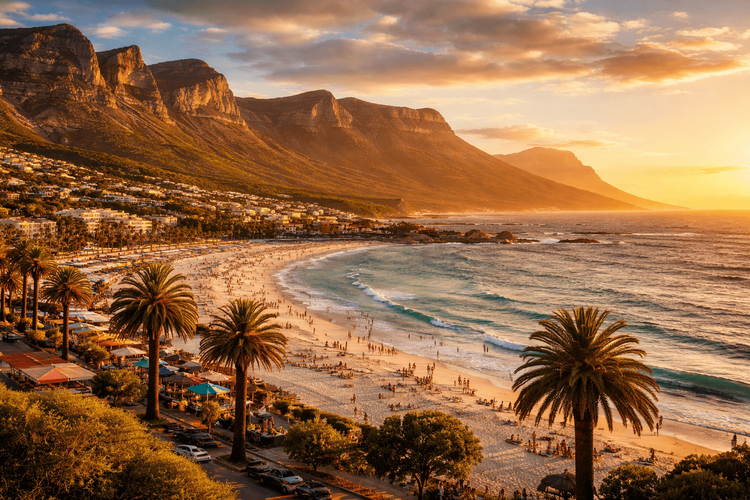

Cape Town’s Shoulder-Season Sweet Spot: Wine Country, Seafront Hotels and Empty Trails
March–May is Cape Town’s sweet spot: calm winds, room on the trails, wine-country harvest, and easy seafront stays. Here’s a 5–7 day plan to make it sing.
Trip Length
5-7 days
Best Time
March–May
Mood
adventure
The first hint you’ve hit the city’s golden window is the air: warm but unhurried, the southeaster finally taking a breath. By late afternoon, Table Mountain sheds its tablecloth and the Atlantic turns pewter-smooth. On the promenade, joggers thin to a trickle and beach paths feel like your own. This is the best time to visit Cape Town—when summer’s heat has mellowed, harvest hums in the Winelands, and the sea, mountains, and waterfront slip easily into one week.
Why March–May in Cape Town just works
Cape Town runs on rhythm. Summer brings energy and wind; winter brings rain and quiet. Between them—March through May—the city settles into a superb balance. Days are clear and sunlit without the fierce gusts that can rattle the Cape in high summer. Evenings tilt cooler, ideal for patio dinners or a jacketed stroll along Sea Point’s seawall. Mountain trails lose their conga line; you’ll pass more sunbirds than people on contour paths. And out in wine country, grapes move from vine to cellar, making tastings feel connected to real-time craft.
Sea conditions are friendlier too. The Atlantic side remains bracing, but mornings can lie calm enough for a guided sea-kayak under Lion’s Head. Over the peninsula in False Bay, the water is gentler and a shade warmer, so a surf lesson or swim actually sounds like a good idea. Most importantly, the city has time for you now: restaurant books are manageable, seafront hotels have rooms with views, and locals are out enjoying their own back yard.
The best time to visit Cape Town: March–May
If you ask people who live here about the best time to visit Cape Town, they’ll point to autumn. The mountain opens her routes without the furnace of midsummer. Vineyards glow amber; cellar doors talk you through fresh vintages. Sunset arrives early enough that you can hike, shower, and still make dinner without rushing. It’s when the Cape’s triad—beach, wine, and mountain—fits neatly into one 5–7 day trip.
Expect daytime highs that welcome t-shirts, with a light layer handy once the sun dips. UV is still real this far south; bring proper protection for exposed trails. Mornings often start cloudless; by late afternoon the light turns syrupy and long—photography heaven from Signal Hill, Chapman’s Peak, or any of the Clifton coves.
A 5–7 day shoulder-season game plan
Here’s how to stitch a week that leans into softer weather, fewer crowds, and that easy Cape Town stride.
Day 1: Seafront and city orientation. Check into a seafront stay in Sea Point, Bantry Bay, or Camps Bay, where the Atlantic is your nightlight. Walk the promenade to shake off the flight, then head to the working harbor area for casual seafood with a view. Time sunset for a short drive up Signal Hill—first look, full panorama.
Day 2: Table Mountain and garden quiet. Start early and hike a front-face route if you’re fit, or ride the cable car when it’s running; the plateau’s stone paths feel almost otherworldly in autumn light. After lunch, swap sandstone for greenery at Kirstenbosch, the national botanical garden on the mountain’s eastern foot. A meander on the canopy walkway and a picnic on the lawns make an easy counterpoint to the morning’s granite.
Day 3: Peninsula loop, penguins included. Trace the Atlantic seaboard through Hout Bay and along Chapman’s Peak Drive—every bend a new angle on the ocean—then continue into the Cape of Good Hope section of Table Mountain National Park. Keep an eye out for ostrich on the dunes and dassies sunning on rocks. On your return via False Bay, pause at the penguin colony near Simon’s Town and, if the sea is calm, swim a sheltered cove before heading back over the mountain.
Day 4: Winelands during harvest. Forty-five minutes to an hour inland, the Cape Winelands roll out between Stellenbosch and Franschhoek, framed by fanged peaks and orderly vines. In March and April, trucks rumble between blocks and cellars are alive with sorting tables and the perfume of ferment. Book a couple of tastings with a focus—pinotage to connect with South Africa’s signature grape, or cap classique if sparkling is your language. Pair with a long farm lunch under oaks.
Day 5: Beach and urban texture. For warm-ish water and mellow surf, choose Muizenberg on False Bay; on the Atlantic side, slot into a wind-sheltered cove on the Clifton string. In the afternoon, explore the City Bowl’s galleries and historical corners, or take a guided street art walk in Woodstock to read the city through murals. Cap it with a sundowner on a rooftop overlooking the harbor cranes.
Day 6: Peaks, passes, and fynbos. If you’ve caught Table Mountain already, consider Lion’s Head for sunrise—spiral paths, chain-aided scrambles at the top, and a city-to-sea panorama that rewards the early alarm. Alternatively, head for Silvermine in the central section of the park for heathland trails, proteas, and a picnic at the dam. Birders should carry binoculars; autumn is generous with sightings.
Day 7: Optional extras. Ferry out to Robben Island to deepen your sense of place, or devote a final day to Constantia’s historic wine valley, closer to the city and rich in old-vine stories. If the ocean is flat, book that sea-kayak and glide beneath cliffs while cormorants arrow past.
Seafront stays and the neighborhoods that fit
Where you base yourself shapes your week. Along the Atlantic, Sea Point and Bantry Bay keep you on the promenade with easy access to tidal pools and sunrise jogs. Camps Bay trades that for a long curve of sand and cafés facing the surf—great in calm autumn spells. In the City Bowl and around the harbor, you’ll be central to museums and dining, with quick access to mountain trails and the peninsula road network. If wine is your north star, consider one night in the Winelands midweek; harvest-season evenings in the valleys feel like an inside track.
Beach time without the squeeze
March and April deliver space. The Clifton beaches and Camps Bay are calmer midweek; you’ll find parking and a generous patch of sand. Remember the Atlantic is crisp—perfect for a plunge-and-sun cycle. For a longer swim, False Bay’s water is friendlier; St. James and Kalk Bay have tidal pools flanked by painted bathhouses that look excellent in late-afternoon light.
Hiking and trails when the mountain exhales
The Cape’s sandstone ridges hold heat, so early starts are still wise. In shoulder season, you can aim higher: contour paths along the Twelve Apostles, boardwalks through silver trees near Cecilia Forest, and stair-stepped gullies up the front face all feel more inviting now. Stick to marked routes, watch footing on smooth rock, and carry water; even in cooler weather, the mountain commands respect. If clouds spill over the summit, pivot to lower routes or the botanical garden—conditions can change quickly.
How to get there—and what to expect on arrival
Flights land at Cape Town International (CPT), about 20–30 minutes from the Atlantic seaboard in light traffic. There are seasonal nonstops from select European and Middle Eastern hubs; otherwise, most travelers connect via Johannesburg. On arrival, the formalities are straightforward for many nationalities—check entry requirements well before you fly.
From the terminal, you have options: licensed taxis and app-based rides, car rentals for peninsula freedom, and a dedicated airport bus into the central city. Cape Town drives on the left, roads are well signed, and autumn’s reduced wind makes coastal drives even more enjoyable. If you plan to explore widely—Winelands, Cape Point, beach-hopping—having your own wheels pays off.
Cape Town is an urban city with wild edges; travel with the same awareness you would in any major metropolis. On trails, start early, stick to known paths, and let someone know your route. In the city, choose well-located accommodations and reputable operators for activities. Power interruptions can occur; many hotels and restaurants have backup systems, but it’s worth asking when you book.
Eating and sipping in season
Autumn menus lean into local seafood, Cape Malay spice, and produce from nearby valleys. You’ll find relaxed cafés along the Atlantic for breakfast-with-a-view and a surge of wine bars in the city center pouring new releases. In the Winelands, tastings range from tiny garagiste rooms to architecturally striking estates; keep your schedule light—three focused visits beat six rushed ones—and build in a walk among the vines.
When exactly is the sweet spot?
For most travelers eyeing a blend of beach, wine, and mountain time, March through May is the pocket. It’s the best time to visit Cape Town if you value clear days, calmer wind, and room to breathe at headline sights. You’ll still feel summer’s warmth in March, with April and May trending cooler and quieter. Book early if you want a sea-facing room over a weekend; midweek availability is your friend.
The takeaway
Cape Town rewards those who meet it in stride. Come when the vines glow and the mountain sheds her scarf. Give yourself 5–7 days to move between promenade and peak, cellar and cove. If you’ve been wondering about the best time to visit Cape Town, the answer is written in autumn light—and it’s waiting.
Where to Stay

Hotel Verde Cape Town Airport
Hotel Verde Cape Town Airport is a 4-star stay near Cape Town International Airport, offering modern rooms, an outdoor pool, fitness center, and eco-friendly design for convenient stopovers and business trips.

Habitat Aparthotel by Totalstay
Habitat Aparthotel by Totalstay is a 4-star Cape Town stay offering apartment-style accommodation with convenient city access and a solid 8.6 guest rating.

Blaauwberg Beach Hotel
Blaauwberg Beach Hotel is a 4-star Cape Town stay near Bloubergstrand, offering easy beach access, sea views, and contemporary rooms. Guests rate it 9.2/10 for its location and comfortable, coastal setting.

Cape Town Lodge Hotel
Cape Town Lodge Hotel is a 4-star stay in central Cape Town, close to the V&A Waterfront and Table Mountain access. It offers comfortable rooms, a restaurant, bar, gym, and city views, with an 8.5/10 guest rating.

Taj Cape Town, South Africa
Set in central Cape Town, Taj Cape Town combines a historic building with contemporary rooms, a spa, indoor pool, and several dining options, placing guests close to the city’s main attractions and business district.