The Best Time to Fall for Crete Is Now: Villages, Vineyards, and Spring Taverns
Skip the lounger: this spring-focused Crete travel guide follows inland wine roads and family-run taverns from Heraklion to Chania, with a 5–7 day route and practical tips.
Trip Length
5-7 days
Best Time
March–May
Mood
cultural
The first sign that spring has taken hold on Crete isn’t the beach. It’s the vines—still low and wiry—pushing new green in the soft light, and the tavern doors along the inland roads swinging open for the season. If you’ve been waiting for a Crete travel guide that skips the sun lounger and chases the scents of thyme, smoke, and young wine, this is your moment.
Spring begins inland, among vines and village squares
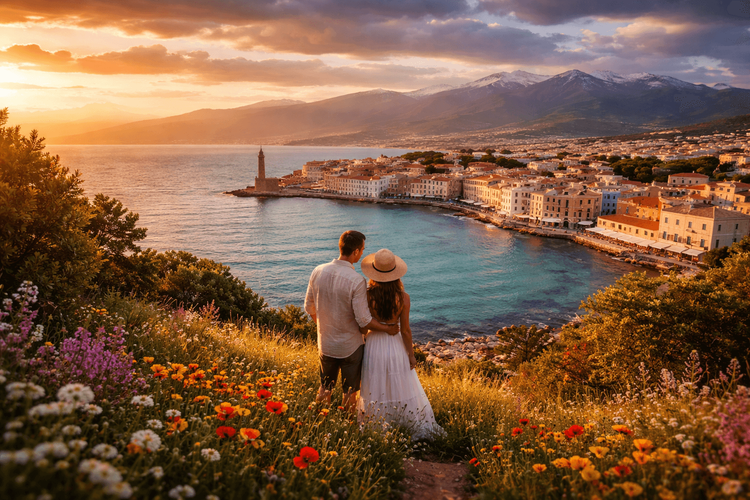
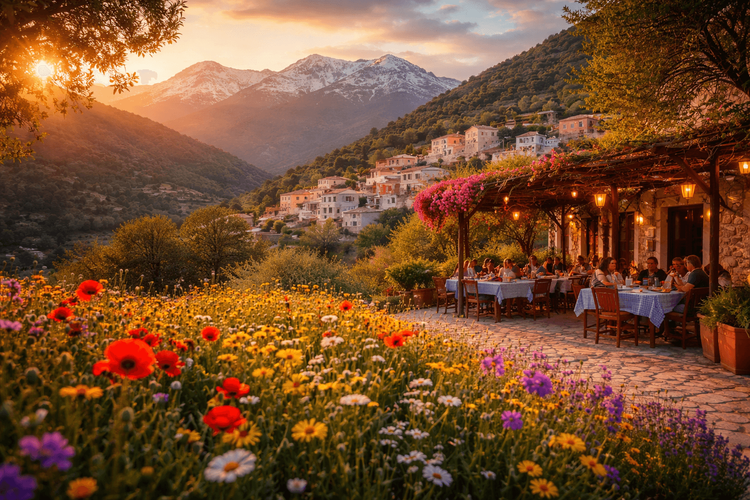
By March, the island’s shoulders are brushed with wildflowers. Blood-red anemones freckle stone terraces; daisies and chamomile crowd copper-colored earth. The coast remains calm, the sea a cool mirror, but inland the days stretch out like a tablecloth. Families start airing their courtyards. Olive presses wind down. Barrels are tapped. The wine roads—threading through valleys near Heraklion, Rethymno, and Chania—hum back to life, and village taverns return with menus that read like field notes: artichokes, wild greens (horta), sweet spring onions, fresh cheeses, snails after rain.
Crete’s native grapes tell their own story: the floral lift of Vilana, the stone-fruit hush of Vidiano, the brambled warmth of Kotsifali and Mandilari, the pale, spice-laced Liatiko. You’ll taste them as they’re meant to be drunk—casually, from carafes, while a neighbor leans in to discuss this year’s weather and a plate of grilled bread sagging with olive oil lands with a soft thud.
Your Crete travel guide to spring wine roads
This is the season for a slow, 5–7 day loop that privileges the island’s center over its edges. Three clusters reward patience and a light hand on the steering wheel: the Peza–Archanes–Dafnes triangle south of Heraklion, the valleys rising behind Rethymno, and the villages east and west of Chania.
Days 1–2: Heraklion’s vine belt (Peza–Archanes–Dafnes)
Fly into Heraklion, claim a car, and point it away from the sea. Within minutes the city cedes to undulating vineyards and almond trees. Base yourself near a wine village—Archanes or Dafnes—where stone alleyways smell faintly of woodsmoke and orange blossom.
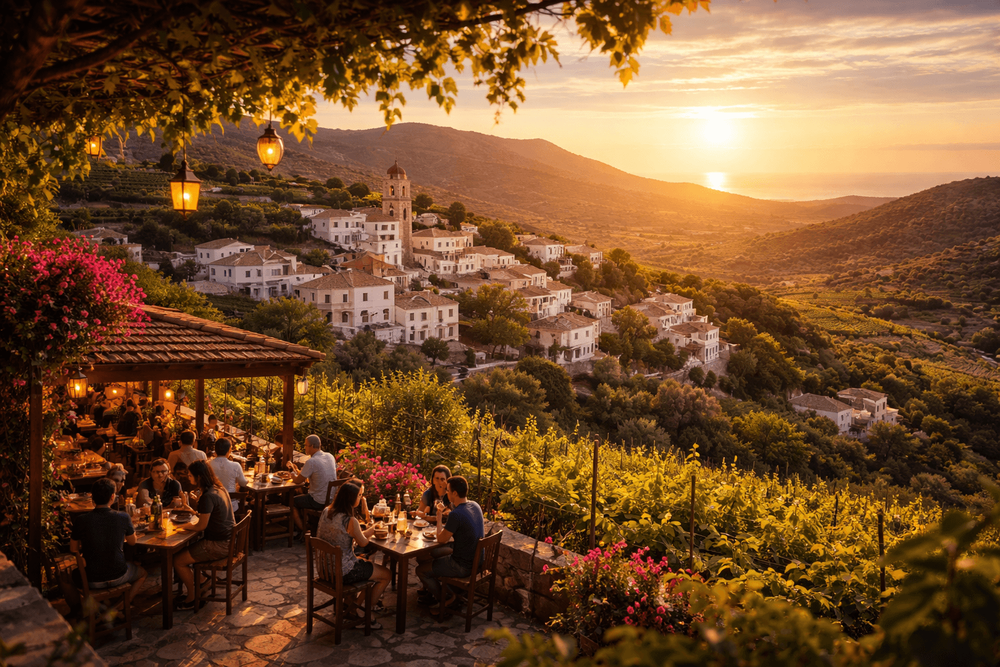
Spend your first morning meandering the Peza plain, where family estates mark the seasons by the color of the hills. Tasting rooms here tend to be unhurried: a pour, a story, a small plate pushed your way. Ask for local varieties by name and you’ll be rewarded with conversations that meander like the roads. Lunch is late in these parts; taverns gather around central squares, their grills perfuming the air. Order by what’s fresh: greens dressed with lemon, goat cooked slowly with artichokes, or whatever the owner is proud of that day.
On day two, climb toward the foothills of Mount Ida (Psiloritis). The higher you go, the more spring clings to the stone—cistus, oregano, thyme. The air is fennel-cool. Keep your tastings compact (designate a driver) and leave room for an afternoon coffee in a kafenio where backgammon chips clack against wood and the only deadline is the arrival of dusk.
Days 3–4: Rethymno and the Amari valley
Shift west along the old national road toward Rethymno, whose inland valleys fold into one another like rumpled linen. The Amari valley runs straight toward Psiloritis, carrying orchards, tiny chapels, and vineyards in its wake. Producers here tend small plots and give Vidiano the spotlight; it’s a grape that feels made for spring—stone fruit, herbs, a line of salinity that perfumes simple food.
Drive village to village, windows down. Stop where you see crates stacked with greens or oranges along the roadside. Long lunches become the day’s anchor: grilled lamb if it’s Easter-tide, chickpeas slow-cooked in clay, rusks softening under tomato and cheese. If you’re keen to walk it off, quiet waymarked trails thread olive groves and streams; just ask a local for a short, shaded loop.
Days 5–7: Chania’s hinterland—Apokoronas and beyond
Finish in the west, around Chania. The city’s harbor will tempt, but spring’s richest notes live inland, in the Apokoronas villages above the bay and in the low hills that push toward the White Mountains. This is Romeiko country, where old vines twist like dancers, and where lunch can easily blur into evening.
Drive the backroads between stone hamlets where squares are canopied by plane trees and a fountain is never far. If time allows, continue toward the Kissamos area for ocean views framed by vineyards. Expect carafes of house wine, grilled country sausages, braised rabbit, and pies layered with greens and local cheese. Spring evenings still ask for a light jacket; warmth comes from coals and company.
Taverns that taste like spring
Tavern culture in Crete is at its most generous right now. Menus are shorter and sharper than in summer, guided by what the fields give. Look for:
- Horta: a mélange of foraged greens, slicked with oil and lemon, slightly bitter and entirely addictive.
- Artichokes: often wed to dill or paired with lamb, tasting of sunlight and rain.
- Fresh cheeses: crumbly mizithra and mellow graviera, both ringing with the island’s grass.
- Snails (chochlioi): pan-sizzled with rosemary or simmered slowly; their appearance signals recent rain.
- Tsikoudia: the island’s clear spirit, poured in tiny glasses by people who mean it. Accept, sip, linger.
Wine etiquette is mercifully low-key. Many taverns serve house wine alongside labels from nearby producers; both are worth your time. If you’re driving, pace yourself. Spring afternoons have a way of persuading you to order “just one more” when birds start up in the sycamores and the light turns honeyed.
Practicalities: how to get there and get around
- Arrivals: Heraklion and Chania airports receive frequent flights from Athens, with seasonal routes from elsewhere in Europe ramping up through spring. Ferries from Piraeus sail overnight to Heraklion or to the port of Souda near Chania; wake to morning light on whitewashed houses.
- Wheels: The wine roads ask for a car. Rentals are available at airports and ports. Rural roads are narrow and scenic; give yourself extra time, and pull over often to let the island come to you.
- Distances: Crete is larger than it looks. A cross-island drive can shrink a day. Anchor in two or three regions rather than trying to “do it all.”
- Money: Cards are widely accepted, but keep small cash for village cafes and roadside fruit.
- Sundays and holidays: Around Orthodox Easter, expect processions, late-night services, and lamb roasting on spits in courtyards. It’s a powerful, communal time to be here.
What to expect on arrival in spring
- Atmosphere: Calmer coasts, energized villages. You’ll be sharing squares with locals, not crowds.
- Weather: Mild days, cool evenings, changeable mountain skies. The sea is crisp; wildflowers run riot.
- Trails and gorges: After heavy rains, some gorge paths may remain closed or partially accessible. Ask locally before setting out.
- Language and signs: Road signs use both Greek and Latin alphabets. A few words in Greek earn smiles, but patience and gestures go a long way.
Where to base yourself
- Heraklion area: Small guesthouses around Archanes or the Peza plain put you among vines and within easy reach of multiple cellars.
- Rethymno’s interior: Farm stays and village homes around the Amari valley balance countryside quiet with access to the coast.
- Chania’s foothills: Apokoronas villages offer stone houses, bay views, and quick drives to both wineries and beaches if a warm afternoon lures you sea-ward.
Choose places that open onto courtyards or terraces; spring is best experienced outdoors, with plates migrating between sun and shade.
When to go: March–May
This is the sweet spot for a wine-and-villages itinerary. March brings flowers and quiet. April often coincides with Orthodox Easter, when rituals spill into the streets and tables. By May, the vines have leafed out, the first swims tempt braver souls, and taverns hit their stride. Book a car early, keep plans elastic, and leave room for serendipity—because the best spring moments on Crete are rarely scheduled.
Final notes for your glass and fork
Take a refillable bottle; villages are dotted with fountains. Shop from roadside stands for oranges and almonds between tastings. If someone places a plate on your table “from the kitchen,” understand that it’s hospitality, not negotiation. Reciprocate with time—linger, ask questions, learn the names of what you’re eating and drinking. That’s the point of a spring circuit here.
And if you came looking for a beach break and found yourself drawn inland instead, consider it good fortune. Before the high-summer chorus arrives, the island speaks in a softer register: shears snipping new growth, tractors tracing lines between vines, spoons clinking against tiny glasses of tsikoudia. Use this Crete travel guide as a sketch, then color outside the lines. The roads are ready, the taverns are lighting coals, and the vines are waking. It’s time to go.
Where to Stay

GDM Megaron, Historical Monument Hotel
GDM Megaron, Historical Monument Hotel is a 5-star stay in Crete, set in a restored landmark near Heraklion’s harbor and city center. It offers elegant rooms, a rooftop pool, spa, restaurant, and easy access to museums and the old town.

ibis Styles Heraklion Central
Centrally located in Heraklion, ibis Styles Heraklion Central is a 4-star stay in Crete with modern rooms, a rooftop terrace, and easy access to shops, restaurants, and the port.

Hyperion City Hotel & Spa
Hyperion City Hotel & Spa is a 4-star Crete stay with a 9.1 guest rating, offering a central base for exploring the island and a spa for relaxation after sightseeing.

Kastro Hotel
Kastro Hotel is a 3-star stay in Crete with a 9.1/10 guest rating, offering a convenient base for exploring the island and a comfortable, well-reviewed experience for travelers.

Kipos Boutique Suites
Kipos Boutique Suites in Crete is a 4-star stay with a 9.1 guest rating, offering a stylish boutique setting and a convenient base for exploring the island’s beaches, towns, and local sights.