The New Luxury of Puglia: Olive Groves, Trulli Hotels and Coastal Farms Beyond the Usual Postcards
A style-led Puglia travel guide to agriturismi, trulli suites, and coastal farms—plus a 5–7 day route, April–June timing, and how to arrive for a quietly romantic stay.
Trip Length
5-7 days
Best Time
April to June
Mood
romance
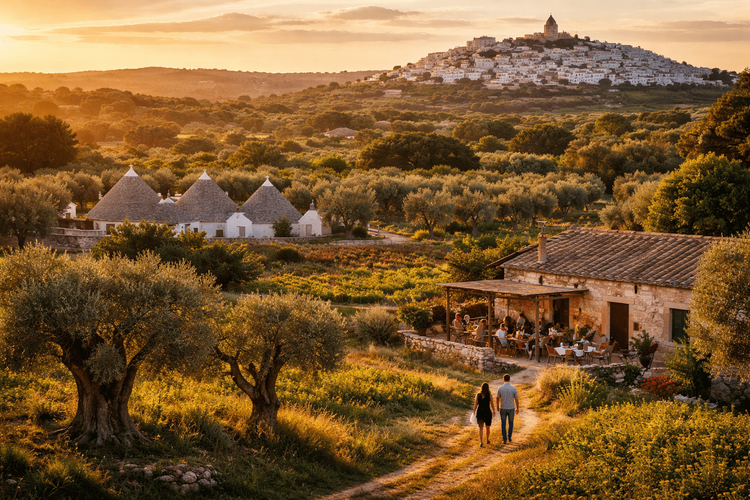
At dusk the olive groves turn silvery and the air smells faintly of wild fennel. A candle flickers in a limestone courtyard and dinner appears the way it should in this corner of Italy—grown within walking distance, served under the stars. This Puglia travel guide is for romantics who prefer whispered elegance to grand gestures: trulli-turned-suites, working farms by the sea, and design-forward palazzi in small towns that glow white at golden hour.
Why Puglia’s New Luxury Lives in the Countryside
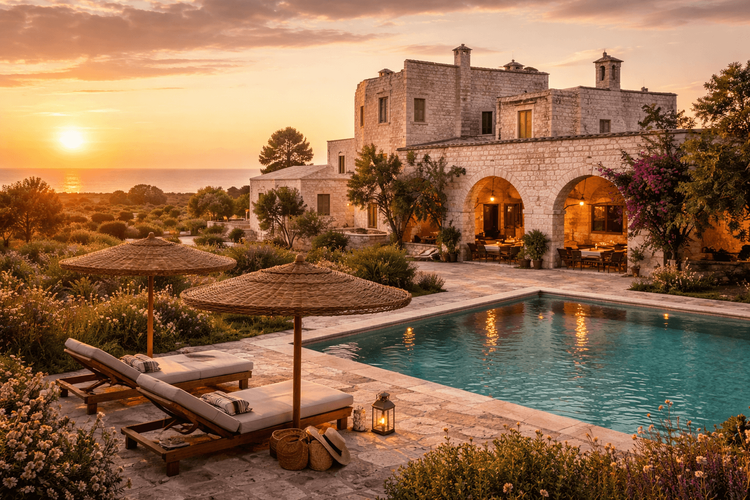
The region’s idea of indulgence isn’t about excess; it’s about edit. You’ll find it in the curve of a dry-stone wall, the cool hush of a star-vaulted ceiling, and the way olive oil catches late-afternoon light. Across Puglia, historic masserie (fortified farm estates) and clusters of trulli have been restored with restraint—think clay plaster, pale linens, reclaimed timber, outdoor showers shaded by fig trees. Many stays are still family-run, which means a glass of their own extra-virgin oil with warm bread at check-in is not a performance; it’s simply how they say welcome.
Design has quietly raised the bar here. Minimalism meets heritage: pale pietra leccese floors, hand-thrown ceramics from Grottaglie, woven rush chairs, and gardens planted with Mediterranean natives that hum with bees. The luxury is time—long breakfasts, slow swims, the soft routine of farm life—punctuated by coastal drives and whitewashed hill towns where the day’s pace is set by the church bells, not your calendar.
Puglia travel guide: Where to stay now
- Masserie with gardens: Inland from the Adriatic, these farm estates often sit among centuries-old olives. Rooms might open to pergolas scented with jasmine, and breakfasts lean on what’s in season—apricots in late spring, cherries in early summer. Many offer low-lit dining rooms for cool evenings and broad terraces for summer dinners.
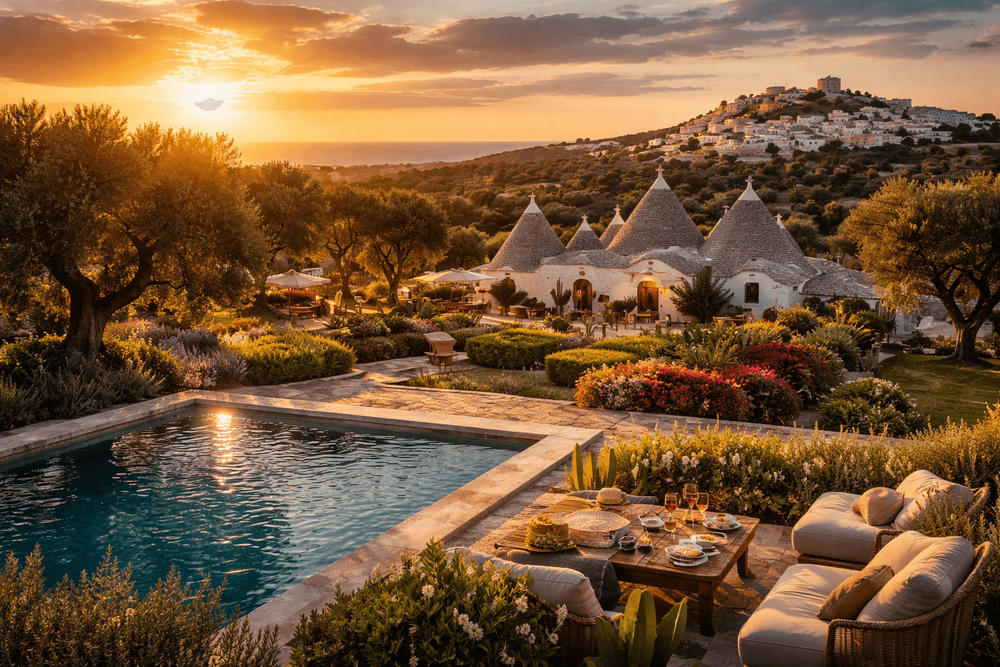
- Trulli clusters: In the Valle d’Itria, several properties have joined cone-roofed trulli into intimate suites. Expect thick stone walls that stay cool, petite plunge pools, and private courtyards edged with rosemary. For a quieter experience, choose trulli in the countryside between Locorotondo and Cisternino rather than in the center of the most photographed towns.
- Coastal farms: Along the stretch north and south of Ostuni, working farms reach almost to the dunes. Here, mornings start with a walk through olive rows to the sea, and afternoons end with plates of grilled vegetables, local cheeses, and chilled rosato from nearby vineyards.
- Town palazzi: In places like Lecce, Martina Franca, and Nardò, noble houses have been reimagined as design-forward guesthouses. Look for limestone courtyards, fresco fragments, and contemporary art that nods to the region’s craft traditions.
When choosing your base, think in radiuses rather than single towns. A stay within 30 minutes of the Valle d’Itria villages, another near the Adriatic reserves, and a final night in the baroque south makes a graceful arc without backtracking.
A Refined 5–7 Day Romance Route
Use this outline as a mood board for a week that balances the countryside with the coast.
Days 1–2: Adriatic Arrival and White Towns
- Land near Bari and settle at a coastal farm or a quiet town palazzo. Spend your first day adjusting to the region’s rhythm with a late lunch in a stone courtyard and a swim along the rocky coves near Polignano a Mare or the harbor walls of Monopoli.
- On day two, head for Ostuni, its lanes white and sunlit, then wander toward Ceglie Messapica for a late-afternoon aperitivo in a small piazza. Dinner back at your stay might be house-made orecchiette with tomatoes and mint, served outdoors.
Days 3–4: Valle d’Itria by Slow Roads
- Move inland to a trulli property or a gardened masseria near Locorotondo or Cisternino. The roads knit through a patchwork of vineyards, cherry orchards, and those photogenic cones.
- Spend a morning in Martina Franca’s historic center; afternoon is for an olive oil tasting on a family estate. If you cycle, early evening rides between stone walls are pure romance.
Days 5–6: Reserves and Quiet Beaches
- Shift south along the coast to a farm stay near a protected reserve such as Torre Guaceto. Mornings are for dune walks and wildflower-framed swims. Pack a simple picnic from a local deli and find a curve of shoreline with clear water; many beaches alternate between serviced lidos and stretches of free sand.
- Late afternoons, visit smaller inland towns. Nardò’s squares glow at sunset; Galatina rewards with quiet streets and artisanal bakeries.
Day 7: Lecce’s Baroque and a Last Long Lunch
- End in Lecce, where honey-colored stone facades look theatrical in the afternoon light. Duck into courtyards, shop for ceramics and linen, then linger over a leisurely lunch before the drive to the airport. If time allows, a dusk stroll through the historic center sends you home with the city’s warm afterimage.
This route fits easily into a 5–7 day trip: trim a coastal day if you’re short on time, or add a night in the Gargano promontory if you want a wilder finale, with forests and sea cliffs.
How to Get There and Move Around
- By air: Bari (BRI) and Brindisi (BDS) are the main gateways, with frequent connections to other European hubs.
- By train: Trenitalia links major cities to Bari and Lecce. Trains are comfortable for city-to-city travel, but rural stays usually require a car.
- By car: Renting is the most flexible way to reach farms and trulli clusters. Manual transmissions are common; request automatic ahead of time. Historic centers often have ZTL restricted zones—park on the edge and walk in. Coastal roads are straightforward; inland lanes are narrow and bordered by low stone walls, so take it slow.
What to Expect on Arrival
- The cadence: Life slides into a midday pause, especially in smaller towns, with shops closing for a few hours. Dinner tends to start later than in Northern Europe.
- The table: Menus lean into what’s grown nearby—fava and wild greens, seasonal vegetables, grilled seafood along the coast. Olive oil is a quiet protagonist; tastings on estates are both educational and delicious.
- The sea: Many beaches offer serviced lidos with umbrellas and loungers, alternating with public stretches. Water in late spring is clear and increasingly swimmable by May.
- The craft: In Grottaglie and Lecce, workshops sell ceramics and carved stone pieces; many stays showcase local makers. Shipping is straightforward if you fall for a lamp or a set of hand-painted plates.
- The land: Centuries-old olive trees are living monuments; respect field boundaries and avoid climbing or damaging roots. Choose producers who care for their groves—your tastings support long-term stewardship.
When to Go
April to June is the region at its most inviting: wildflowers splashing color across roadside verges, warm days for poolside idling, and evenings cool enough for a wrap at dinner. Beaches feel roomy, hill towns are lively without pressure, and you can still wander alleys without the high-summer glare. If you’re planning a romantic trip, these months let you lean into long lunches and unhurried drives before the crowds and heat of late July and August.
Design Details to Notice
Part of the pleasure of Puglia’s stays is tactile. You’ll see limestone slabs underfoot, star-vaulted ceilings above, limewash walls in chalky tones, and courtyards shaped by citrus and bay laurel. Look for reclaimed doors with iron latches, hand-loomed throws on stone benches, and those beautiful amphora-like jars once used to store oil. Lighting is gentle—lanterns, not spotlights—because the drama belongs to the sky.
Responsible Romance: Small Choices, Big Impact
Opt for stays that source locally and reduce waste; ask about their groves and gardens. Book guides from the area for olive oil or wine tastings. Swim in marked zones within reserves and take any trash with you—coastal ecosystems are delicate. If a property invites you to plant a sapling in its grove, say yes; it’s a tiny act that lingers long after you’ve left.
The Takeaway
The new luxury here is not loud. It’s the hush of stone rooms at noon, the shimmer of olive leaves at sunset, the first sip of a pale rosato while swallows script the sky. Let this Puglia travel guide be your compass to agriturismi, trulli suites, and coastal farms that favor feeling over fuss. Book April to June, set a gentle tempo, and the region will reward you with days that feel both beautifully designed and completely effortless.
Where to Stay

Charming Trulli
Charming Trulli is a 3-star property in Puglia offering traditional stone trulli accommodation close to Alberobello, Ostuni and the Salento coast; it holds a 9.6/10 guest rating and provides easy access to UNESCO sites, regional towns and beaches.

Trulli Soave
Trulli Soave is a 3.5-star trulli-style property in Puglia, rated 8.6/10, offering traditional stone rooms and a convenient base for exploring Alberobello, Ostuni and the towns and coastline of the Salento region.

Hotel Ramapendula
Hotel Ramapendula is a 4-star stay in Puglia, near Alberobello, Ostuni and Salento, with a guest rating of 8.8/10. It offers a convenient base for exploring the region's trulli towns, countryside and Adriatic coast.

Romantic Trulli
Romantic Trulli is a 4-star stay in Puglia’s Alberobello, Ostuni, and Salento area, offering easy access to the region’s trulli villages, Adriatic beaches, and hill towns, with a 9/10 guest rating.

Terrazza Sui Trulli
Terrazza Sui Trulli is a 3-star hotel in Puglia, rated 9.5/10 by guests, featuring a terrace with views of the trulli and acting as a convenient base to explore Alberobello, Ostuni and the beaches and towns of the Salento peninsula.